
Why Your Solar or Wind Farm Is Only Half the Solution in Renewable Energy
Generating and delivering clean energy are two very different problems. Storage is what turns a renewable asset into a dispatchable, commercially viable source of power.
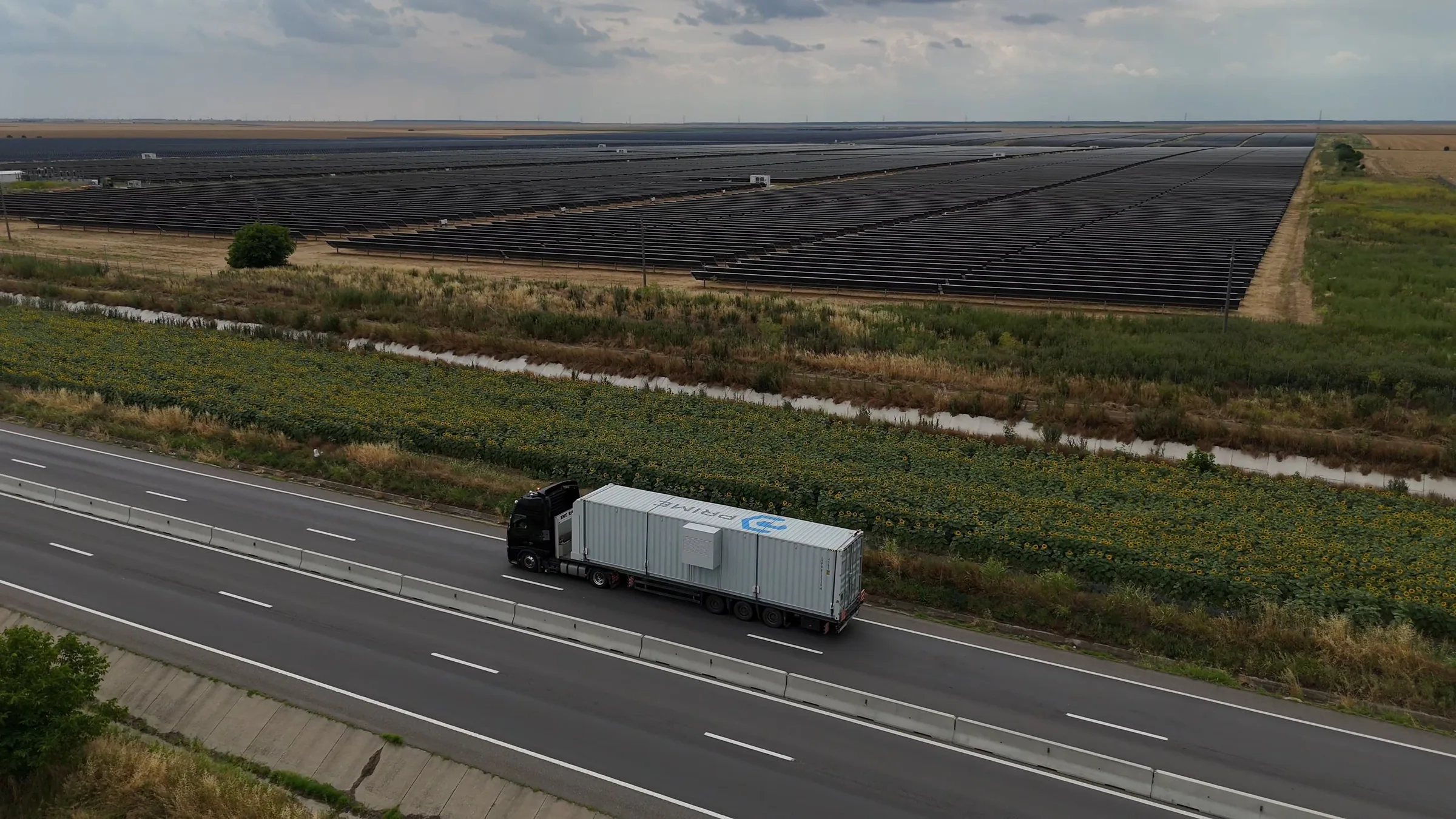
There's a moment that every renewable energy operator knows well. The wind is blowing hard, the sun is at its peak, the turbines are spinning at full capacity — and the grid doesn't want the power.
Energy that was generated but had nowhere to go. Energy that costs money to produce and returns nothing.
It's one of the quieter failures of the energy transition. Not dramatic enough to make headlines, but significant enough to reshape how serious investors think about renewables. The truth is, generating and delivering clean energy are two very different problems. And right now, most of Europe is still solving only the first one.
The sun doesn't negotiate with peak hours
Renewable energy has a fundamental tension with the way modern grids were designed. Grids were built around a simple logic: power is generated when it's needed. Coal plants, gas turbines, nuclear reactors — all of them can ramp up or down in response to demand. They follow the curve.
Wind and solar don't follow anything. They follow the weather.
A photovoltaic farm in southern Romania produces its maximum output in the middle of the day, exactly when industrial demand is lower and residential demand hasn't peaked yet. A wind farm on the Black Sea coast generates most of its energy at night, in winter, when transmission lines are already under pressure from other sources. The energy is real. The mismatch is also real.
This isn't a flaw in renewable technology. It's a structural challenge that only becomes more acute as penetration increases. At 10% renewable share, the grid absorbs the variability. At 40%, 60%, 80% — the variability is the grid, and something has to manage it.
That something is energy storage.
What happens without it
Romania's renewable capacity has grown substantially over the last decade. Wind projects in Dobrogea and Tulcea, solar installations across the south, hybrid projects combining both — the pipeline is real, and the investment is accelerating.
But the grid tells a different story. Negative prices during high-production periods. Curtailment orders that force operators to shut down perfectly functional turbines. Congestion on transmission lines that weren't built to carry distributed renewable flows. Penalties for failing to deliver contracted energy during low-wind, low-sun periods.
These aren't edge cases. They're the daily operational reality of running renewables without storage.
The fundamental issue is that a solar or wind asset without storage is, by definition, an interruptible energy source. It can participate in the market, but it cannot guarantee delivery. It can generate revenue, but it cannot control when. And in a grid that increasingly prices flexibility over raw capacity, that's a significant commercial handicap.
Romania alone currently needs an estimated 4–6 GWh of energy storage to integrate its existing renewable capacity adequately. That number will only grow.
Storage changes the physics of the problem
A battery system doesn't generate a single watt. What it does is shift energy in time — capturing it when it's abundant and releasing it when it's needed. That sounds simple. The implications are not.
For a wind farm operator, a co-located battery system means the difference between curtailment and revenue. Between a negative-price hour and a peak-price delivery. Between a project with merchant risk and one with dispatchable output that can be contracted.
For a solar developer, storage means the farm doesn't go dark at 7 pm when residential consumption hits its evening peak. It means the panels that were generating at noon are still generating at sunset.
For the grid itself, distributed storage means fewer congestion events, better frequency regulation, and the ability to absorb renewable variability without relying on gas peakers to compensate.
This is why the industry phrase has shifted from "renewables plus storage" to "renewables need storage." Not as an upgrade. As a completion.
We've seen this in practice
At Prime Batteries, we don't speak about storage in theory. We've delivered it in the field, at scale, across some of Romania's most complex renewable projects.
At Crucea Nord — Hidroelectrica's wind farm in Constanța County — we delivered a 72 MWh lithium-ion battery system together with ENEVO Group. The project directly addresses what wind operators face every day: variable output, grid constraints, and the need to participate in balancing markets with real dispatchable capacity. It received the Energy Storage Project Partnership Award at the Romanian CEO Energy Forum & Awards 2025.
At the Lumina Photovoltaic Park operated by PPC Romania, we commissioned four containerized high-capacity BESS units — designed to absorb solar generation peaks and redistribute energy across the demand curve.
With Monsson, we're rolling out a 15 MWh system for Veroniki Wind — a full EPC delivery, from engineering to commissioning, designed around a wind farm's specific production profile.
And at VERBUND's Alpha Wind Nord in Tulcea County, we're delivering a 48 MW/76 MWh system alongside ENEVO Group — one of the largest battery storage projects in Romania — with construction set to begin in early 2026.
Each of these projects started with the same question: the wind turbines are spinning, the panels are generating — but where does that energy go, and when? Storage is what makes that question answerable.
It's not about adding a battery to a wind farm. It's about completing the design of an energy asset that can actually function as a reliable, dispatchable, commercially viable source of power.
The energy transition isn't just about building more renewable capacity. It's about building renewable capacity that works — all the time, not just when the sun and wind cooperate.
That's half of the solution that too many projects are still missing.
Ready to talk about your project?
Prime Batteries Technology designs and manufactures advanced energy storage systems — from industrial applications to grid-scale BESS — entirely in Europe, from its production facility in Cernica, Romania.
Keep reading
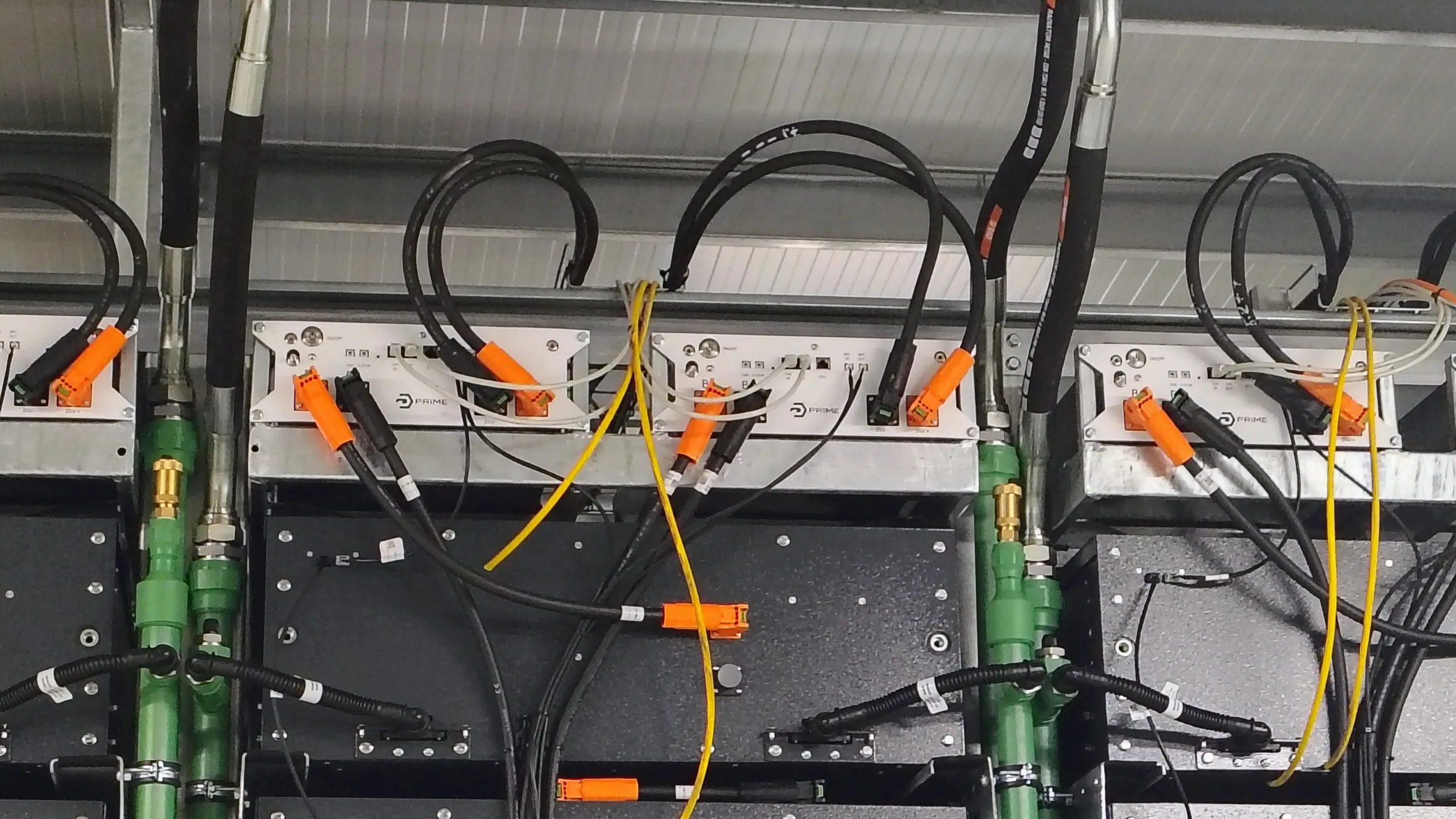
Why the Company That Designs Your Battery Should Also Be the One That Builds It
The split-responsibility model looks reasonable on paper but creates problems in practice. When one team designs, builds and commissions a BESS, accountability stops being a chain of blame.
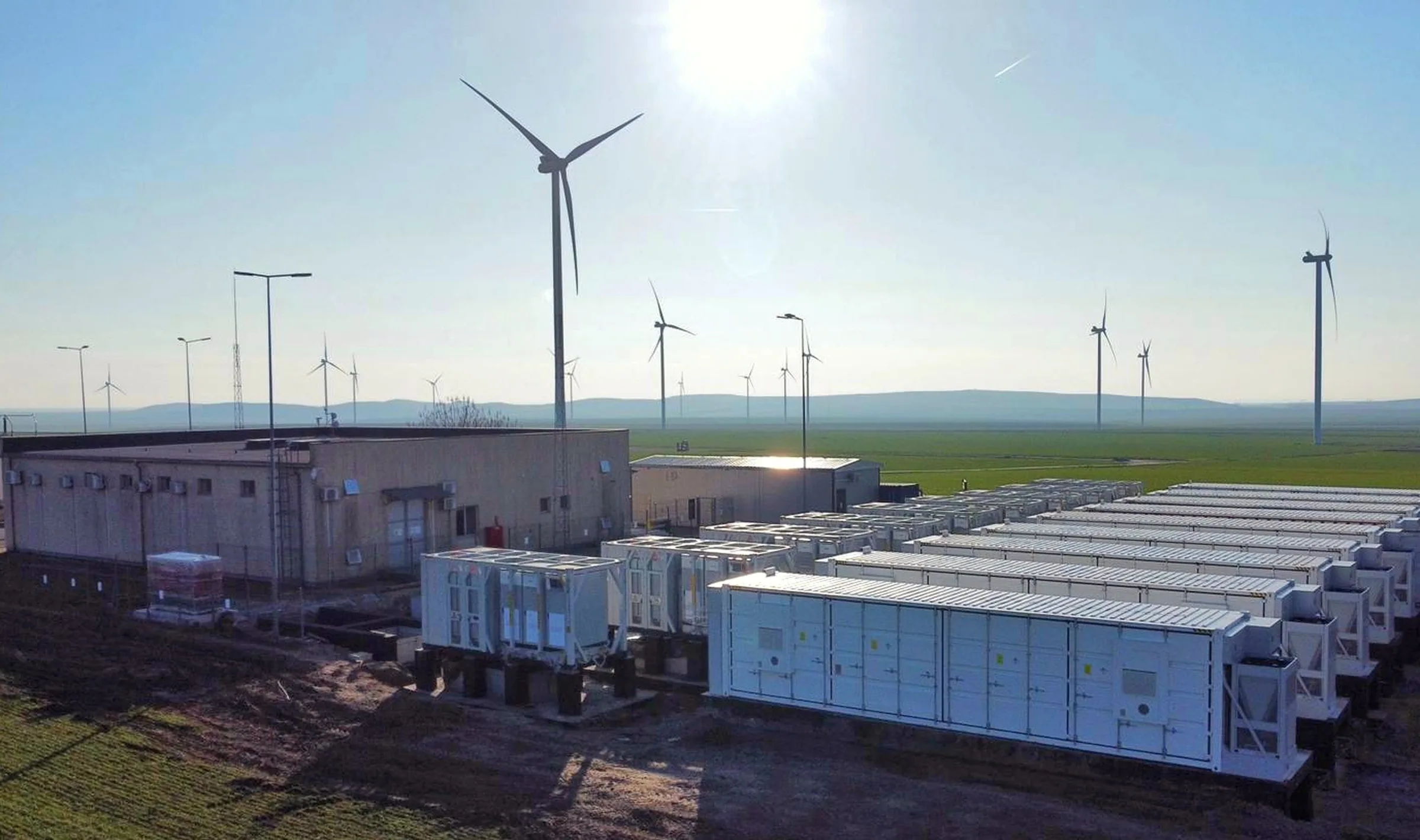
What Makes a Battery System European, and Why It Matters More Than You Think
Where a battery cell is actually manufactured — not the enclosure, not the software, not the registered address — is the question that separates a European battery from a battery sold in Europe.