
What Makes a Battery System European, and Why It Matters More Than You Think
Where the cell is actually manufactured — not where the enclosure is assembled — is the question that separates a European battery from a battery sold in Europe. And regulation is about to make that distinction unavoidable.
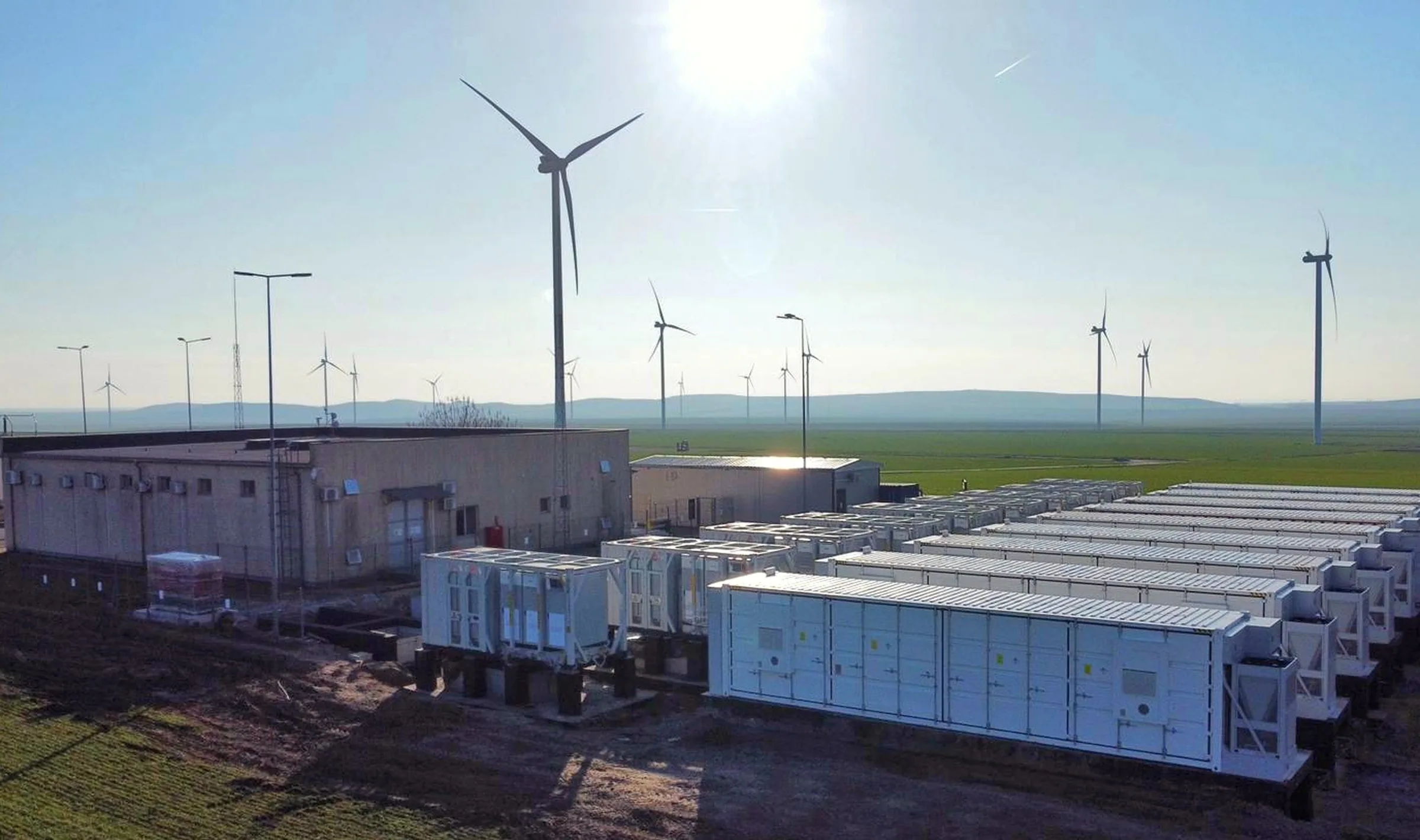
Here is a question worth asking the next time someone offers you a European energy storage system.
Where was the battery cell manufactured?
Not the enclosure. Not the software. Not the company's registered address. The cell — the electrochemical unit at the core of the battery, where energy is actually stored and released. That's the question that separates a European battery from a battery sold in Europe.
It's a reality with consequences — commercial, regulatory, and strategic — that are becoming harder to ignore as energy storage moves from a niche technology into critical infrastructure.
The regulatory reality is changing fast
The EU Battery Regulation, which entered into force in 2023 and is being phased in through 2030, introduces requirements that have no precedent in the energy storage industry. Due diligence on supply chains. Carbon footprint declarations per battery unit. Minimum recycled content thresholds. A battery passport — a digital record of a battery's origin, composition, and lifecycle — that will eventually be mandatory for industrial and EV batteries placed on the EU market.
These requirements are not aspirational. They have implementation deadlines. And over the next several years, they will make the question of where a battery actually comes from a compliance matter, not just a preference.
For a company buying a BESS system today with a ten or fifteen-year operational horizon, the regulatory exposure is real. A system built from cells with opaque or unverifiable origins, from a supplier without documented chain-of-custody data, may become difficult to insure, finance, or operate without remediation costs in the second half of its life.
The procurement decision made today will be made in a regulatory environment that doesn't yet fully exist. That asymmetry is worth pricing in.
Why it matters for financing large-scale BESS projects
The financing of large-scale BESS projects has matured significantly in the last three years. What was once structured on relationship lending and technology optimism has moved toward project finance logic — where bankability depends on clearly documented risk, performance guarantees, and counterparty credibility.
Lenders and insurers are now asking more detailed questions about battery provenance than they did two years ago. Where are the cells from? What warranty does the manufacturer — not the integrator, the manufacturer — stand behind? What happens to the project's debt covenants if the cell supplier exits the market or becomes subject to trade restrictions?
These are not hypothetical concerns. Supply chain disruptions from 2020 to 2022 exposed the concentration risk of single-region manufacturing dependencies, affecting every industry. The energy storage sector is not insulated from those dynamics.
A BESS system backed by a vertically integrated European manufacturer — one that controls its own cell production, BMS development, and system integration — presents a fundamentally different risk profile to a project finance committee than an assembled system with a multi-tier supply chain spanning three continents.
Traceability is the new quality standard
There's a simpler way to think about all of this.
In any industry where safety and long-term performance matter, the ability to trace a component back to its origin is a proxy for quality control. Not because foreign components are inherently inferior — but because traceability is what makes accountability possible. It's what allows you to investigate a failure, issue a targeted recall, and enforce a warranty claim against the manufacturer of the product in question.
In the pharmaceutical industry, chain-of-custody documentation for active ingredients is mandatory. In aerospace, every component has a traceable history. Energy storage is heading in the same direction — driven partly by regulation, partly by the insurance market, and partly by the plain logic of deploying systems that need to perform reliably for a decade or more in critical infrastructure contexts.
A BESS supplier that can show you where the lithium came from, how the cells were tested, what quality standards the manufacturing facility operates under, and who is legally responsible for performance at each stage of the value chain is offering something fundamentally different from one that cannot.
What Prime Batteries does differently
Prime Batteries Technology manufactures energy storage systems in Romania at its facility in Cernica, Ilfov — from battery cells to complete, integrated BESS units. This isn't a marketing position. It's a manufacturing architecture that has direct consequences for every question raised above.
The cells are not sourced from a catalogue and assembled into an enclosure. Prime's vertical integration means the company controls engineering decisions at every level of the system — from cell chemistry to module design, battery management system, power conversion, and system integration. When a Prime BESS is delivered to a wind farm or a commercial facility, the company that hands over the keys is the same company that built what's inside.
Prime holds TÜV certification — independent third-party verification of its systems' safety and performance standards, one of the most recognized quality marks in European industrial manufacturing. The company's production facility has a current capacity of 2.3 GWh annually, with a planned expansion to 8.3 GWh in the next years.
In early 2025, Prime took a step further. Through a joint venture with Top Material in South Korea, the company entered the production of battery active materials — the cathode and anode precursors that are the foundation of cell chemistry. This is an unusual move for any European manufacturer. It positions Prime at a level of the value chain that almost no EU-based company occupies, reducing dependence on external material sourcing and strengthening the traceability of its supply chain from raw material to finished system.
When Stéphane Séjourné, Executive Vice-President of the European Commission, visited Prime's Cernica facility in January 2025, the conversation was about exactly this: the role of European deep-tech manufacturing in reducing strategic dependence on non-EU supply chains for critical energy infrastructure. That visit didn't happen because Prime is a promising startup. It happened because the company represents something that European energy policy is actively trying to foster.
Five questions to ask any BESS supplier
Whether you're evaluating Prime or anyone else, these are the questions that separate a genuine answer from a well-designed brochure.
Where are the battery cells manufactured? Not assembled. Manufactured. Ask for the facility's name and the country of origin. If the answer is vague, that's the answer.
Who holds the warranty on the cells — the integrator or the cell manufacturer? If a third party made the cells and the integrator is passing on the warranty, ask what happens to your coverage if the integrator and the cell manufacturer disagree about who's responsible for a failure.
What documentation exists for supply chain origin? Under the EU Battery Regulation, this will eventually be mandatory. Suppliers who can provide it now are ahead of the compliance curve. Those who can't are carrying regulatory risk into your project.
Who provides ongoing monitoring and maintenance — and what does the service agreement actually cover? An unmanaged BESS system will underperform. Capacity fade, thermal management, and BMS updates — these require continuous engineering attention. Know who's responsible and what the SLA terms actually guarantee.
What is the manufacturer's production capacity and financial stability? A ten-year storage project needs a counterparty who will still be operating in year ten. Production capacity, investor backing, and market position are legitimate due diligence inputs — not just for project finance, but for any long-term energy asset.
The question behind the question
The energy transition in Europe is, among other things, an industrial strategy. The goal is not just to decarbonize the energy system but to ensure that the technology enabling that decarbonization is designed, manufactured, and controlled within the EU — creating jobs, building expertise, and reducing the strategic vulnerabilities that full dependence on imported technology would create.
Battery storage is central to that strategy. And the companies that will define what European battery manufacturing looks like over the next decade are being built right now.
When you ask where a battery comes from, you're asking about more than compliance and supply chain risk. You're asking which version of the energy transition you want to be part of — the one where Europe is a market for technology made elsewhere, or the one where Europe makes it.
Ready to talk about your project?
Prime Batteries Technology manufactures advanced energy storage systems entirely in Europe, from its production facility in Cernica, Romania. TÜV certified. Vertically integrated from cell to complete BESS.
Keep reading
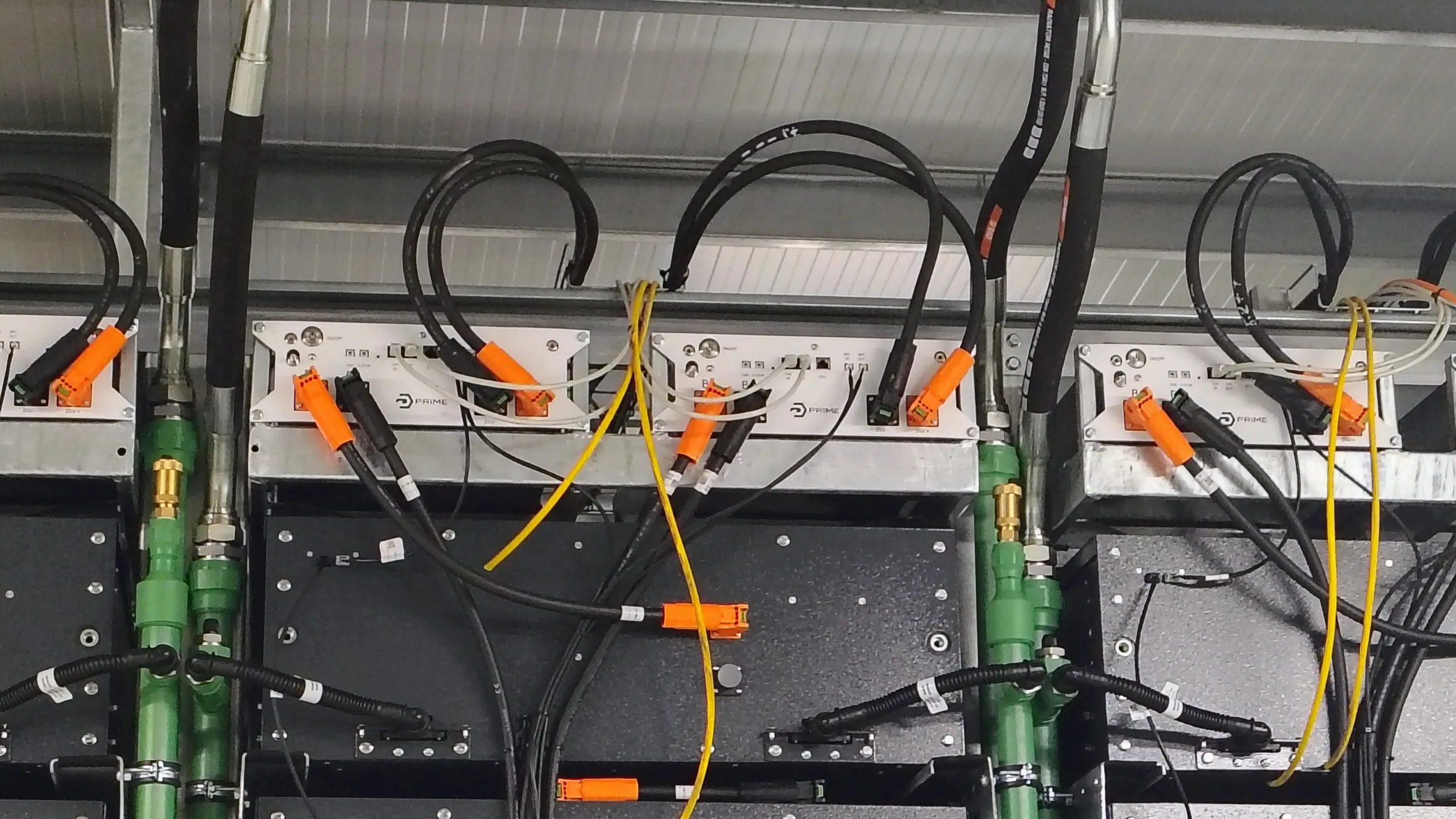
Why the Company That Designs Your Battery Should Also Be the One That Builds It
The split-responsibility model looks reasonable on paper but creates problems in practice. When one team designs, builds and commissions a BESS, accountability stops being a chain of blame.
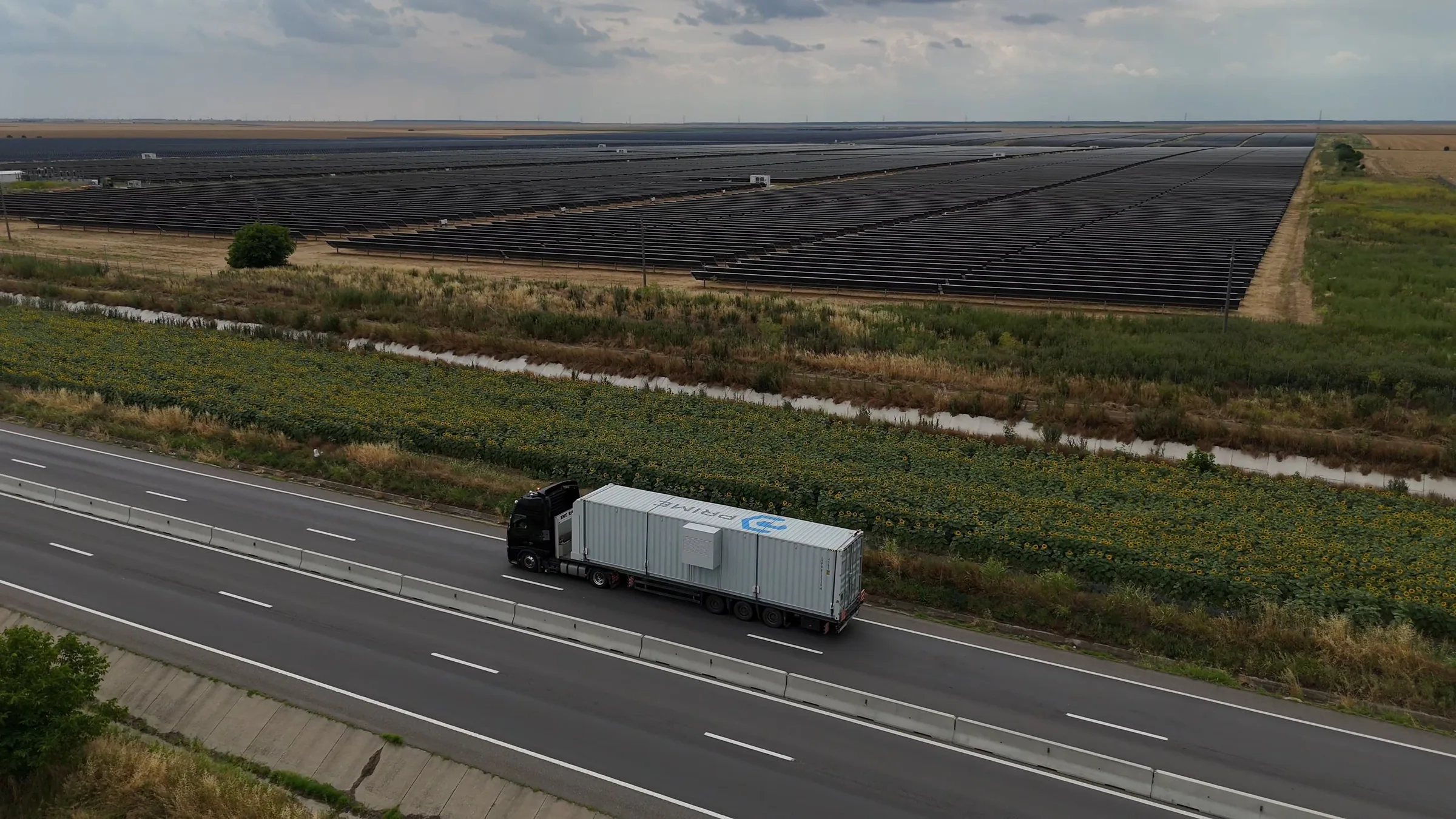
Why Your Solar or Wind Farm Is Only Half the Solution in Renewable Energy
Generating and delivering clean energy are two different problems. Storage turns a variable renewable asset into dispatchable, commercially viable power — and Romania alone needs 4–6 GWh of it.